Zapper app is a wallet dashboard for DeFi zaps and NFT portfolios
Zapper app is a wallet-first Ethereum DeFi dashboard that turns a public address into a readable portfolio view, then lets the owner package swaps, liquidity entries, and exits into a single signed wallet transaction. It is built for people who move between tokens, liquidity pools, lending positions, and NFTs, and need one place to inspect balances, route actions, and understand wallet activity before committing a transaction.
Wallet discovery before a swap or zap
The first useful feature is the address view. Paste an Ethereum address, connect a wallet, or follow a known account, and the interface organizes tokens, DeFi positions, and NFT holdings into a portfolio-style screen. That matters because a wallet rarely contains only simple ERC-20 balances. It also carries LP tokens, staking receipts, lending collateral, borrowed assets, claimable rewards, and approvals that make sense only when they are resolved against the protocol that issued them.
A connected wallet keeps Zapper app in sync with actions the owner signs elsewhere. If a user supplies ETH to Aave, swaps through Uniswap, collects an NFT, or moves stablecoins across an EVM network, the dashboard reflects the new wallet state after the chain data updates. The app experience is strongest when the wallet is active across several protocols, because the interface reduces the work of checking each protocol page separately.
How zaps compress token moves
The zap workflow is the part that made the service stand out among early DeFi dashboards. A zap takes a desired end state, such as entering a liquidity pool or exiting a position, and builds the required route as one user-facing transaction flow. Under the surface, that route involves swaps, wrapping or unwrapping ETH, adding liquidity, or breaking a position back into tokens. The wallet owner reviews the route and signs from the wallet they control.
The zap side of Zapper app works best for actions that otherwise require several browser tabs and repeated confirmations. It gives the user one route to inspect, one expected output to compare, and a clearer sense of what assets leave the wallet. Gas, slippage, pool composition, and token approvals still shape the final cost, so the confirmation screen deserves a close read before signing.
NFTs, DeFi positions, and token balances in one address view
NFT ownership adds another layer to wallet tracking because ERC-721 and ERC-1155 assets do not behave like fungible tokens. A wallet can hold profile pictures, gaming items, mint passes, allowlist tokens, and collection rewards beside ETH, USDC, WETH, and governance tokens. Zapper app presents NFTs as part of the same address story rather than forcing users to split portfolio review between a token tracker and a marketplace profile.
This combined view helps during routine wallet maintenance. A user checking an address before making a token move sees whether valuable NFTs, active lending collateral, or liquidity positions sit in the same wallet. That context matters for security and for gas planning, especially when the address uses hardware wallet signing or holds assets across several EVM chains.
Connecting a wallet and reading a watched address
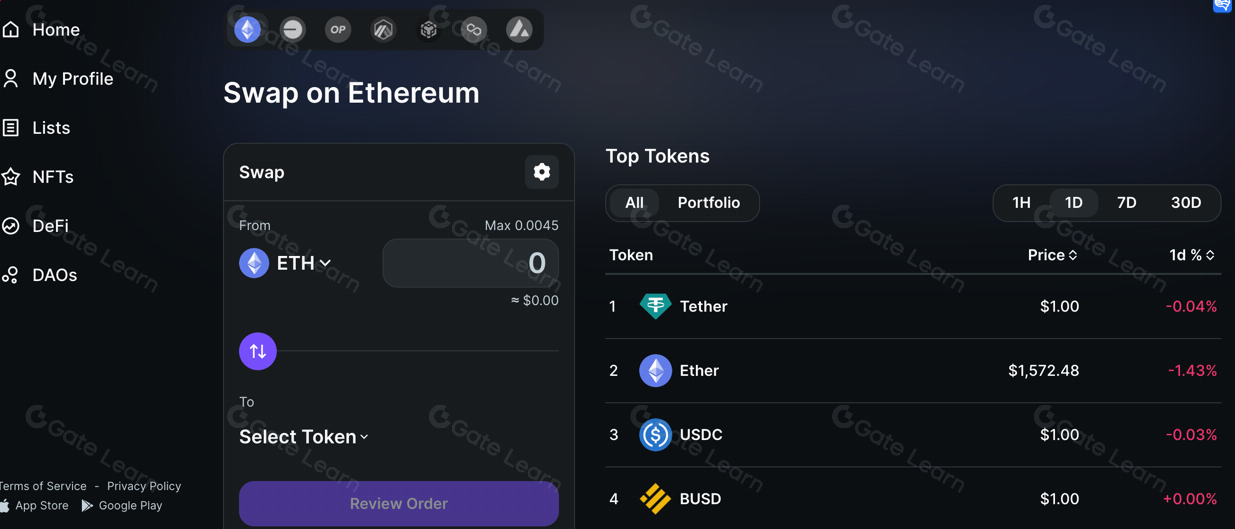
A first session in Zapper app starts with either a public address lookup or a wallet connection. Address lookup is enough for passive tracking because Ethereum and EVM balances are public. Wallet connection is needed for actions such as zaps, swaps, token approvals, and position exits. Common connection methods include browser wallets and WalletConnect-compatible mobile wallets; hardware wallets work through the wallet software that exposes the signing prompt.
- Search an address first when the goal is portfolio review.
- Connect the wallet only when an action requires a signature.
- Check the active network before signing a transaction.
- Read token approval requests separately from the main action.
- Compare expected output with the assets leaving the wallet.
Once connected, the app does not need a seed phrase. The wallet handles signing, and the dashboard receives the public address plus permission to request signatures. That separation is the normal browser-wallet model for DeFi interfaces.
Where gas, approvals, and routing costs appear
Costs come from the chain and the route. Ethereum mainnet gas pays validators for execution. Layer 2 networks such as Base, Arbitrum, Optimism, and Polygon reduce the fee burden for many actions, though bridging and settlement mechanics differ across networks. A zap or swap also inherits the economics of the underlying protocol: exchange price, liquidity depth, slippage setting, pool fees, and any protocol-specific withdrawal or entry rules.
Approvals deserve separate attention because they give a contract permission to move a token from the wallet. Many DeFi actions begin with an approval transaction and then continue with the main transaction. Reviewing the token, spender contract, and allowance size prevents sloppy wallet hygiene. Revoking old approvals after leaving a position is a sensible maintenance habit for active DeFi users.
Daily portfolio tracking across Ethereum and EVM chains
The strongest use case for Zapper app is repeated wallet review, not a one-time transaction. Active DeFi users accumulate small balances, claimable rewards, liquidity tokens, and NFTs across chains. A dashboard view turns that scattered activity into a digestible portfolio without requiring a manual spreadsheet update after every swap. It also gives users a faster way to notice unexpected balance changes or stale positions.
Position tracking is especially useful for liquidity providers. LP tokens represent a share of a pool, so the wallet balance alone does not explain the underlying assets. A readable dashboard translates the position into token exposure, current value, and protocol context. That view helps a user decide whether to add liquidity, exit, rebalance, or leave a position untouched through a market move.
Security boundaries for a self-custodied dashboard
Self-custody means the connected wallet remains the place where authority lives. The dashboard requests signatures; the wallet approves or rejects them. This boundary protects users only when they read prompts carefully. A malicious approval, a confusing token symbol, or a rushed signature creates risk even on a polished interface, because the blockchain executes what the wallet signs.
Good workflow beats panic. Keep larger holdings in a wallet that signs fewer experimental transactions, use a separate address for high-frequency DeFi testing, and remove unused approvals after leaving protocols. For NFTs, avoid signing broad transfer permissions unless the action clearly requires them. The same habits apply across MetaMask, Coinbase Wallet, Rabby, Rainbow, and other Ethereum-compatible wallets.
Rainbow, DeBank, Zerion, and direct protocol apps
The surrounding toolset is worth knowing because no single interface owns every wallet workflow. Rainbow is a wallet-first mobile experience with strong NFT presentation. DeBank emphasizes wallet profiles, DeFi position tracking, and social discovery across EVM addresses. Zerion combines a wallet with portfolio tracking and mobile-first asset management. Direct protocol apps such as Uniswap, Aave, Curve, and Lido remain important when a user wants the native controls of a specific protocol.
| Tool | Best fit | Concrete strength |
|---|---|---|
| Zapper | Portfolio review plus zaps | Bundles multi-step DeFi moves into a guided route |
| DeBank | Wallet profile research | Strong address-level DeFi and social context |
| Zerion | Mobile portfolio management | Wallet and tracker in one consumer app |
| Direct protocol app | Protocol-specific control | Native settings for pools, markets, and claims |
Use Zapper app as the readable control room for an active Ethereum wallet: inspect the address, understand the position mix, choose whether a zap improves the route, and let the wallet make the final signature decision. That role is narrow, practical, and valuable for anyone whose DeFi activity spans tokens, NFTs, liquidity pools, and several EVM networks.
Zapper app - common questions
- Fees on zaps: what charges appear before signing?
- A zap route shows costs tied to the transaction path: network gas, swap price impact, slippage settings, pool fees, and any protocol-level cost built into the position. Some actions require a separate token approval before the main transaction. The wallet confirmation is the final checkpoint, because it displays the network fee and the contract interaction being signed.
- Can I watch an Ethereum address without connecting a wallet?
- Yes. Public address lookup works for passive tracking because Ethereum and EVM chain balances are visible onchain. Entering an address lets the dashboard display tokens, DeFi positions, and NFTs linked to that address. A wallet connection becomes necessary only when the user wants to sign an approval, swap, zap, claim, or other transaction.
- Does the dashboard replace tax software exports?
- Treat the dashboard as a portfolio and activity review aid. Tax reporting needs a full transaction record across wallets, exchanges, bridges, NFT marketplaces, and DeFi protocols. A wallet dashboard helps identify positions and history worth reconciling, but complete reporting requires the user to combine onchain activity with exchange statements and jurisdiction-specific tax rules.
- Recovering access after changing browsers: what should I do?
- Reconnect the same wallet or paste the same public address. Since the assets live onchain and the wallet controls signing, changing browsers does not move the portfolio. Browser-stored preferences may need to be rebuilt, but the address history, token balances, NFTs, and DeFi positions return when the same wallet address is loaded again.